Hinduism
Origins & Timeline
Place of Origin
Ancient India
South Asian Subcontinent
Time Period
c. 3000–1500 BCE
Era
Indus Valley to Vedic Period
FROM
ANCIENT
TO
PRESENT
Hinduism is the principal religion of India and among the oldest religious traditions in the world. Its early roots can be traced to the Indus Valley Civilization (c. 3000–1500 BCE), and it was further systematized during the Vedic period (c. 1500–500 BCE).
* The tradition evolved over thousands of years, absorbing ideas from different periods and cultures, forming a highly inclusive religious system.
Krishna
Hinduism has no single founder
Divine Teacher & Avatar of Vishnu
"Whenever righteousness declines and unrighteousness rises, I manifest myself."
Hinduism's formation involved numerous sages (ṛṣis), philosophers, and teachers, whose spiritual insights accumulated over thousands of years. The earliest authorities are the Vedic sages who 'heard' eternal truths.
Core Briefs
Dharma
Cosmic Order & Moral Duty
The moral law and order that sustains the universe, society, and individual life. Different stages of life and social roles carry different forms of dharma.
Karma
Action & Causality
All actions produce corresponding consequences that shape destiny. This extends across both present and future lives.
Samsara
Cycle of Rebirth
The ongoing cycle of birth, death, and rebirth. Individuals experience different forms of existence influenced by accumulated karma.
Moksha
Liberation
Freedom from samsara—transcendence of the cycle of rebirth. Can be attained through knowledge (Jñāna), devotion (Bhakti), action (Karma), or Yoga.
Brahman
Ultimate Reality
The ultimate reality that transcends all names and forms, the source of all existence. Can be understood through diverse divine manifestations.
Sacred Scriptures
Bhagavad Gītā
Bhagavad Gītā
A dialogue between Krishna and Arjuna about duty, action, and liberation
"You have the right to work, but never to the fruit of work."
The Vedas
The Vedas
The earliest sacred texts: Ṛg, Yajur, Sāma, and Atharva Vedas
"Truth is one; sages call it by various names."
Upaniṣads
Upaniṣads
Philosophical texts exploring self, universe, and ultimate reality
"Tat tvam asi - You are That."
Mahābhārata
Mahābhārata
Epic containing the Bhagavad Gītā and stories of dharma
"What is here is elsewhere; what is not here is nowhere."
Bhagavad Gītā
A dialogue between Krishna and Arjuna about duty, action, and liberation
"You have the right to work, but never to the fruit of work."
The Vedas
The earliest sacred texts: Ṛg, Yajur, Sāma, and Atharva Vedas
"Truth is one; sages call it by various names."
Upaniṣads
Philosophical texts exploring self, universe, and ultimate reality
"Tat tvam asi - You are That."
Mahābhārata
Epic containing the Bhagavad Gītā and stories of dharma
"What is here is elsewhere; what is not here is nowhere."
Sacred Symbols
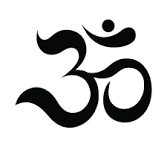
Om (ॐ)
The primordial sound representing the source of the universe and ultimate reality. It is chanted at the beginning and end of prayers and meditations.

Lotus
Purity, spiritual awakening, and transcendence. Rising unstained from muddy waters, it symbolizes the soul's journey to enlightenment.
Stories & Illustrations
Visual journey through sacred narratives

#01
Lord Krishna - Founder of Hinduism
Krishna is one of the most widely revered Hindu deities, worshipped as the eighth avatar of Vishnu and the Supreme God in his own right.

#02
Arjuna at War
The great warrior Arjuna faces his moral dilemma on the battlefield of Kurukshetra, where Lord Krishna delivers the sacred teachings of the Bhagavad Gita.

#03
Reincarnation (Samsara)
The eternal cycle of death and rebirth, where the soul transmigrates from one body to another based on karma.

#04
Karma - The Law of Cause and Effect
The universal law that governs all actions - every action has consequences that shape one's future existence.
Knowledge Quiz
Question 1 of 3
Score: 0
What is the concept of 'Dharma' in Hinduism?