Zoroastrianism
Origins & Timeline
Place of Origin
Ancient Iranian Plateau
Iranian Plateau and Central Asia
Time Period
c. 1500–1000 BCE
Era
Ancient Iranian Period
FROM
ANCIENT
TO
PRESENT
Zoroastrianism originated in the ancient Iranian plateau and surrounding regions of Central Asia. Its formative period is generally placed in the second millennium BCE (commonly estimated around c. 1500–1000 BCE, though the exact dating remains debated). In the tribal societies of that era, religious life was often intertwined with sacrificial traditions, social order, and warfare. The rise of Zoroastrianism represents a major shift: it elevated faith from a focus on outward ritual practice to a spiritual path centred on truth, moral choice, and personal responsibility. In Chinese, Zoroastrianism is known as '祆教' (Xiān jiào), a name coined during the Sui-Tang dynasty. The character 祆 (xiān) is rare and relates to Buddhist translations of the Sanskrit 'deva' (deity). Variants include '火祆教' and '拜火教' (Fire-worship Religion), emphasizing the centrality of fire in its symbolism—though fire itself is not the object of worship.
* One of the world's oldest monotheistic religions, it profoundly influenced Judaism, Christianity, and Islam.
Zoroaster
Also known as Zarathustra
Prophet
Youth: Questioning old customs
Traditional accounts describe Zoroaster as questioning certain religious practices of his time, especially reflecting on whether religion should be used to cover deception, violence, and injustice.
Adult turning point: Revelation and mission
Zoroaster proclaimed the supreme good God Ahura Mazda as the 'Wise Lord,' presenting the universe's fundamental opposition as Truth/Order (Asha) versus Falsehood/Lie (Druj). He taught that humanity has free will and must choose between good and evil.
Public teaching: Resistance and persecution
Because the new teachings challenged established religious and social structures, his early mission was difficult, facing strong opposition.
Key breakthrough: Support of ruler Vishtaspa
The turning point came when ruler Vishtaspa converted and offered support, enabling the faith to spread from individual proclamation to communal transmission.
Core Briefs
Asha
Truth, Order, Justice
The proper way of the universe and the rightful order. Asha represents truth, righteousness, and the cosmic order that sustains existence.
Druj
Falsehood, Chaos
A departure from truth and a force that disrupts order. The moral struggle between Asha and Druj defines the universe's fundamental tension.
Free Will
Moral Agency
Human beings are agents capable of choice. Each moral decision influences one's spiritual destiny, the justice of society, and whether the world moves toward renewal or decay.
Good Thoughts, Words, Deeds
Threefold Path
The focus of Zoroaster's reform was to bring faith back from ritual-centered religion to the choice of truth and the practice of ethics through thought, word, and action.
World Renewal
Frashokereti
Good will ultimately overcome evil, and the world will be renewed and restored to justice. This gives ethical choices and good deeds profound significance.
Sacred Scriptures
Gathas
Gathas
Zoroaster's own hymns and teachings—the most sacred and oldest portion of the Avesta
Yasna
Yasna
Central liturgical texts including praise, prayers, and ritual chanting. The Gathas are embedded within it.
Visperad
Visperad
Liturgical supplements; an expansion of the Yasna, often used for festivals and fuller ceremonial occasions
Vendidad
Vendidad
Laws and purity regulations—a blend of religious code and ritual manual
Yashts
Yashts
Hymns praising various sacred powers and beings, rich in mythic tradition
Khordeh Avesta
Khordeh Avesta
A collection of daily prayers for personal and household devotion
Gathas
Zoroaster's own hymns and teachings—the most sacred and oldest portion of the Avesta
The most central part closest to the founder's 'original voice.' Note: Ahura Mazda means 'Wise Lord' (Ahura = Lord/Sovereign; Mazda = Wisdom/the Knowing One).
Yasna
Central liturgical texts including praise, prayers, and ritual chanting. The Gathas are embedded within it.
Visperad
Liturgical supplements; an expansion of the Yasna, often used for festivals and fuller ceremonial occasions
Vendidad
Laws and purity regulations—a blend of religious code and ritual manual
Yashts
Hymns praising various sacred powers and beings, rich in mythic tradition
Khordeh Avesta
A collection of daily prayers for personal and household devotion
Sacred Symbols
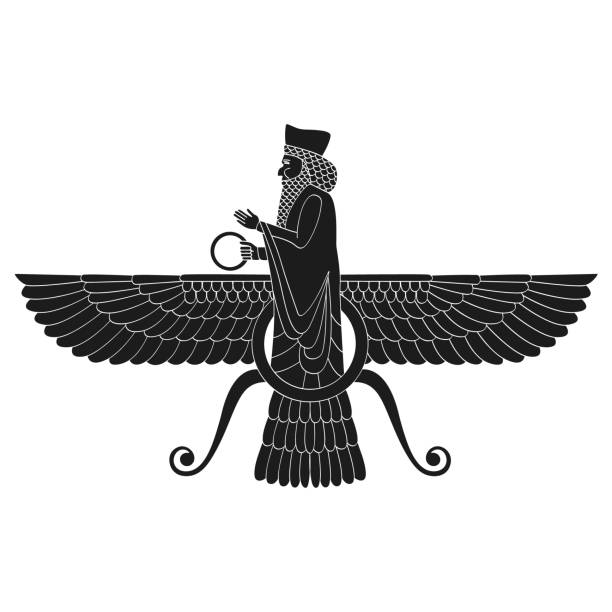
Faravahar
One of the primary symbols depicting a Fravashi or the Khvarenah (divine glory). Ahura Mazda is the beginning and the end, the creator of everything, the eternal and uncreated, the all-good and source of Asha.
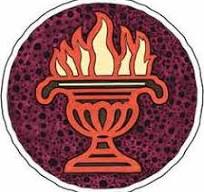
Sacred Fire
Fire symbolizes light, purity, truth, and wisdom. The sacred fire is not worshipped as a deity; rather, it symbolizes the light of truth of Ahura Mazda. In Zoroastrian temples, the flame is kept continually burning.
Stories & Illustrations
Visual journey through sacred narratives

#01
Zarathustra - Founder of Zoroastrianism
The ancient Persian prophet who founded one of the world's oldest monotheistic religions around 3,500 years ago.

#02
The Eternal Flame
The eternal flame of a Zoroastrian fire temple, symbolizing truth, righteousness, and the divine presence of Ahura Mazda.

#03
The Avesta Scripture
The primary collection of Zoroastrian religious texts, containing the teachings and prayers of the faith.

#04
The Three Wise Men (Magi)
The Three Wise Men who brought gifts to baby Jesus at the manger were Zoroastrian Magi (priests) from Persia.
Knowledge Quiz
Question 1 of 3
Score: 0
What is 'Asha' in Zoroastrianism?